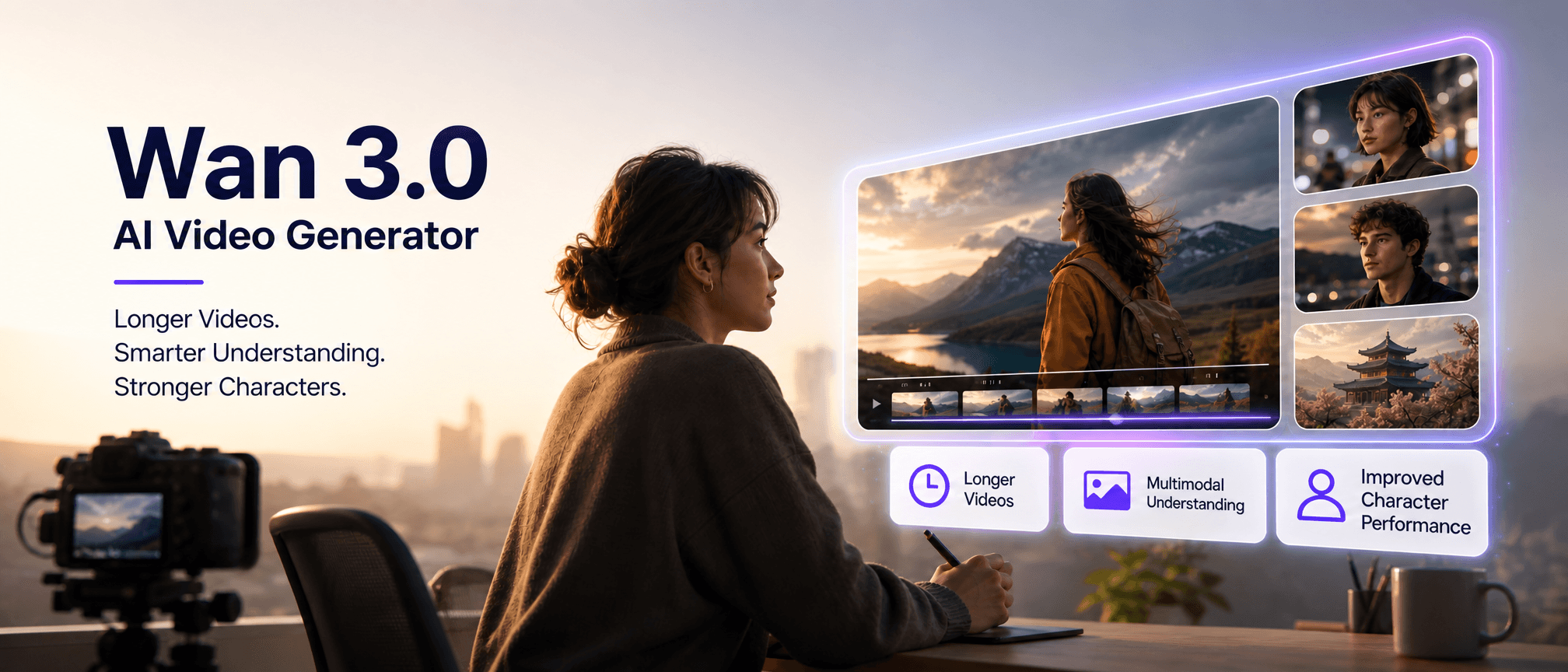
Wan 3.0 AI Video Generator: How It Changes AI Video Creation
Introduction: AI Video Is Entering a New Creative Phase
AI video generation is moving beyond the era of short, isolated clips.
Early AI video tools demonstrated that artificial intelligence could transform text and images into moving visuals. However, generating a few impressive seconds of video is very different from producing content that fits into a real creative workflow.
Creators need more than visual quality. They need continuity, recognizable characters, useful references, controllable scenes, and enough duration to communicate a complete idea.
This is where the Wan 3.0 AI Video Generator becomes particularly interesting.
Rather than viewing Wan 3.0 simply as another model upgrade, it is more useful to see it as part of a broader shift in how AI video can be created and used. Its capabilities are increasingly aligned with the practical requirements of structured video production.
Three areas are especially important:
· Longer video generation gives scenes more room to develop.
· Multimodal understanding allows creators to work with visual references and existing assets.
· Improved character performance makes AI-generated people more suitable for sustained video content.
Together, these capabilities make Wan 3.0 more relevant to creators looking beyond isolated visual experiments.
What Makes Wan 3.0 Different?
The development of AI video can be viewed as a gradual progression.
At first, the main question was:
Can AI generate video?
As models improved, the focus shifted toward:
Can AI generate better-looking and more controllable video?
The next challenge is:
Can AI help creators produce usable content?
This requires more than visual quality.
A practical AI Video Generator needs to understand relationships between characters and environments, maintain visual continuity, interpret different types of creative information, and generate sequences long enough to communicate meaningful actions.
Wan 3.0 moves in this direction.
Its value is not limited to a single technical improvement. More importantly, its capabilities can support different stages of the creative process, from visual references and scene planning to longer video generation and character-driven content.
Three Capabilities That Matter for Creators
Capability | What It Changes | Creative Value |
Longer Generation | Provides more time for a scene to develop | Supports continuous actions and stronger narrative flow |
Multimodal Input | Allows creators to use more than text | Makes existing images, videos, and references more useful |
Character Performance | Improves human appearance and movement | Helps create more believable recurring characters |
These capabilities address three practical challenges in AI video creation:
Duration → Input → Performance
The result is a workflow that can be more flexible than traditional prompt-only generation.
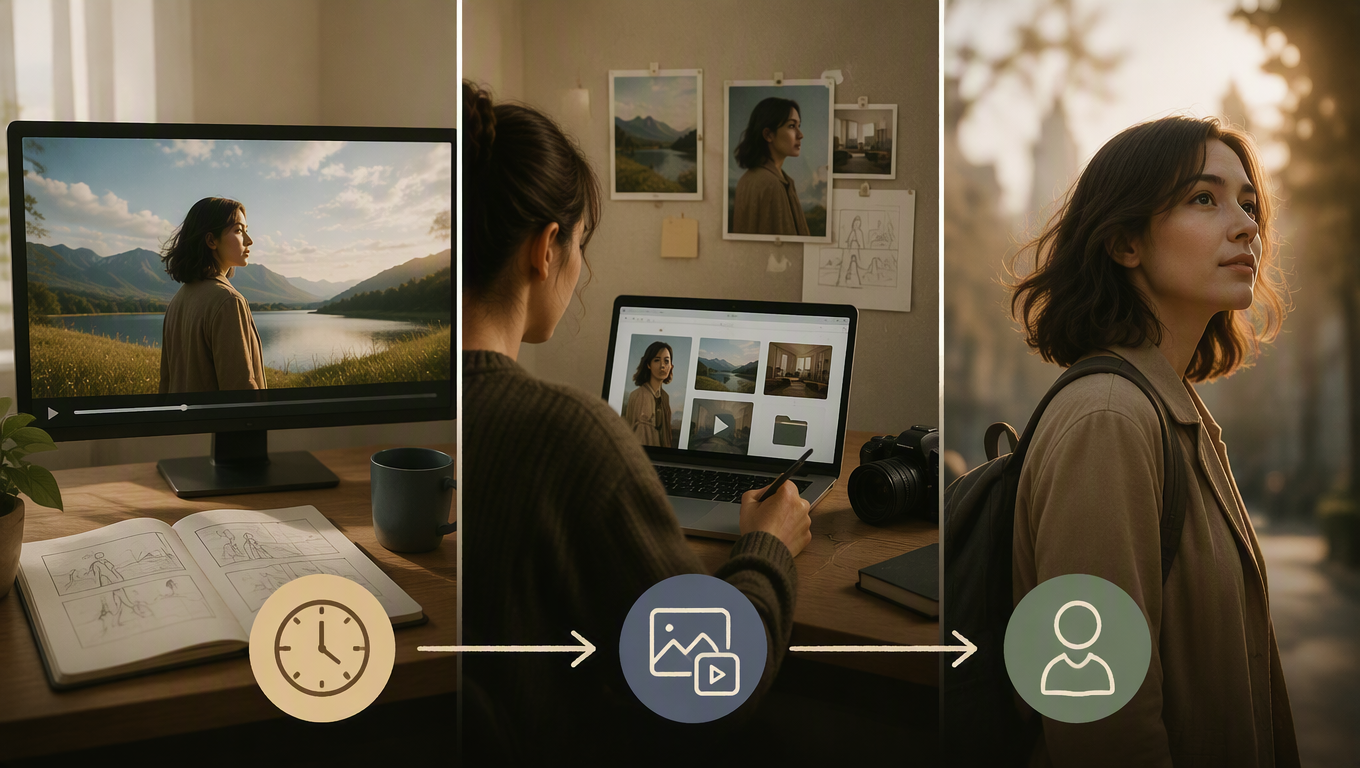 Longer Generation: Designing Scenes Instead of Clips
Video duration is more than a technical specification. It directly affects how creators design their scenes.
When generation is limited to very short sequences, complex actions often need to be divided into multiple clips.
For example:
A character enters a café, notices someone across the room, walks toward the table, and reacts.
A short-generation workflow may require several separate generations. Each additional generation creates another opportunity for differences in character appearance, lighting, camera position, or background details.
Wan 3.0 supports video generation of up to 30 seconds, giving creators more space to develop a complete visual sequence.
Instead of generating:
Character enters.
Then:
Character walks.
Then:
Character reacts.
Creators can increasingly think in terms of:
One continuous scene with multiple connected actions.
What Longer Generation Enables
Longer sequences can support:
· Character interactions
· Product demonstrations
· Continuous camera movements
· Lifestyle scenes
· Short narrative sequences
· Social media storytelling
The biggest change is conceptual.
Creators can move from asking:
“What can I generate in a few seconds?”
to:
“What can happen within one complete shot?”
This makes AI video more compatible with traditional visual storytelling and scene-based production.
 Multimodal Creation: Using Existing Creative Assets
Text prompts remain one of the most flexible ways to communicate with AI, but they are not always the most efficient way to express visual ideas.
A creator may already have:
· Character designs
· Product photographs
· Storyboards
· Mood boards
· Style references
· Video examples
Recreating all of this information through text can be difficult and time-consuming.
Wan 3.0's multimodal capabilities support a more reference-driven approach.
Instead of describing every visual detail from scratch, creators can use existing materials to communicate their creative direction.
From Prompt-Driven to Reference-Driven Creation
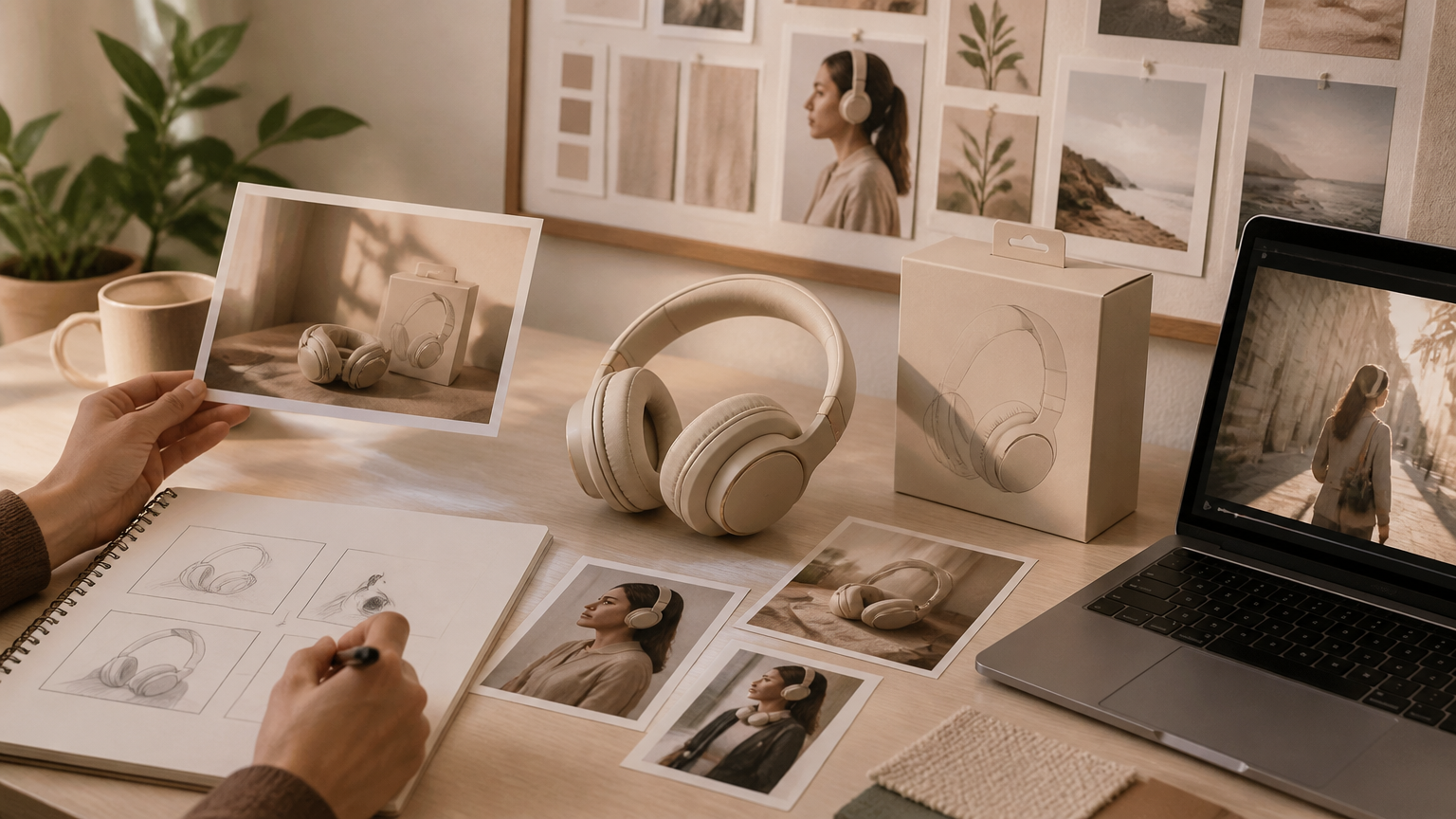
Consider a brand launching a new pair of headphones.
The team already has:
· Product photos
· Packaging designs
· Brand guidelines
· Campaign references
A traditional text-only workflow might attempt to describe the product in detail.
A reference-driven workflow can start with the actual product image and combine it with instructions about the desired scene, movement, and visual style.
The workflow becomes:
Product Asset → Visual Reference → Scene Direction → AI Video
This approach is especially useful for commercial content because creators do not need AI to invent every visual detail.
Instead, AI can transform existing creative assets into new video content.
Potential applications include:
· Fashion campaigns
· Product advertising
· Automotive content
· Consumer electronics
· Brand storytelling
· Social media marketing
The broader advantage is simple:
Creators can show AI what they mean instead of describing everything in words.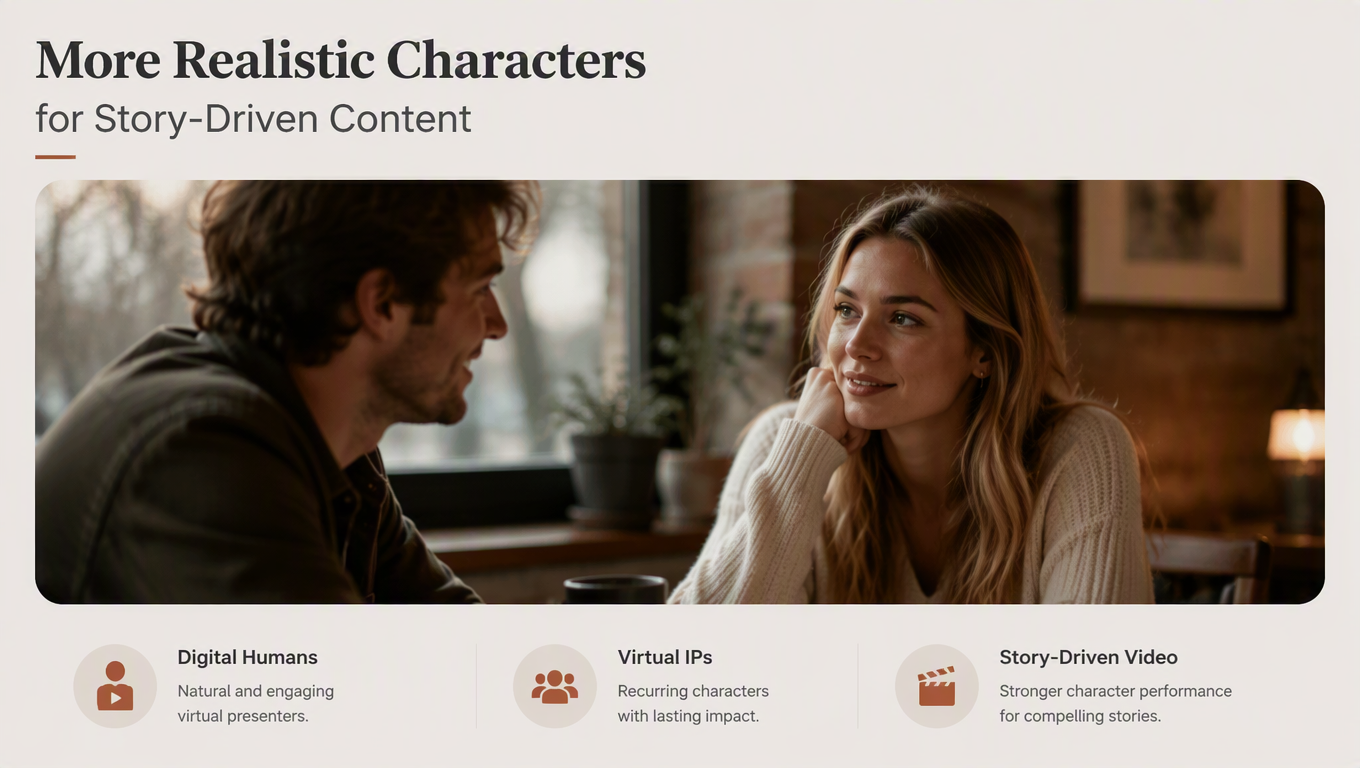 More Realistic Characters for Story-Driven Content
Human characters remain one of the most challenging subjects in AI video generation.
A face that changes between frames can be immediately noticeable, and these inconsistencies become even more obvious when a character remains on screen for an extended sequence.
Wan 3.0 focuses on improving areas such as:
· Facial consistency
· Expression quality
· Body movement
· Motion coordination
· Overall character realism
This matters because a video character needs to do more than look convincing in a single frame.
A character may need to:
· Walk
· Turn
· Look at another person
· React emotionally
· Interact with objects
· Move through an environment
The goal is therefore not simply to generate a realistic human.
It is to create a character that can remain recognizable and believable throughout a scene.
Digital Humans
Virtual presenters, hosts, and AI personalities can benefit from more natural human performance.
Virtual IPs
Recurring characters can become recognizable assets across multiple pieces of content.
Story-Driven Video
More believable character performance can support short films, narrative videos, and serialized storytelling.
A More Practical AI Video Workflow
The traditional AI video workflow is often:
Prompt → Generate → Review → Regenerate
This works well for experimentation, but larger projects require more structure.
A more production-oriented workflow can look like this:
1. Define the Goal
Determine whether the video is for a product launch, social campaign, story, concept film, or character project.
2. Prepare References
Collect relevant character images, product photos, environments, mood boards, or video references.
3. Plan the Scene
Define:
· Who is in the scene?
· Where does it take place?
· What are the characters doing?
· How does the camera move?
· What changes during the sequence?
4. Generate the Sequence
Use the available duration to create a complete visual beat rather than an isolated action.
5. Review Continuity
Check:
· Character identity
· Object consistency
· Movement
· Camera behavior
· Overall visual coherence
6. Refine
Adjust prompts, references, or creative direction based on the result.
This turns AI video creation from a simple generation loop into a more structured iterative creative workflow.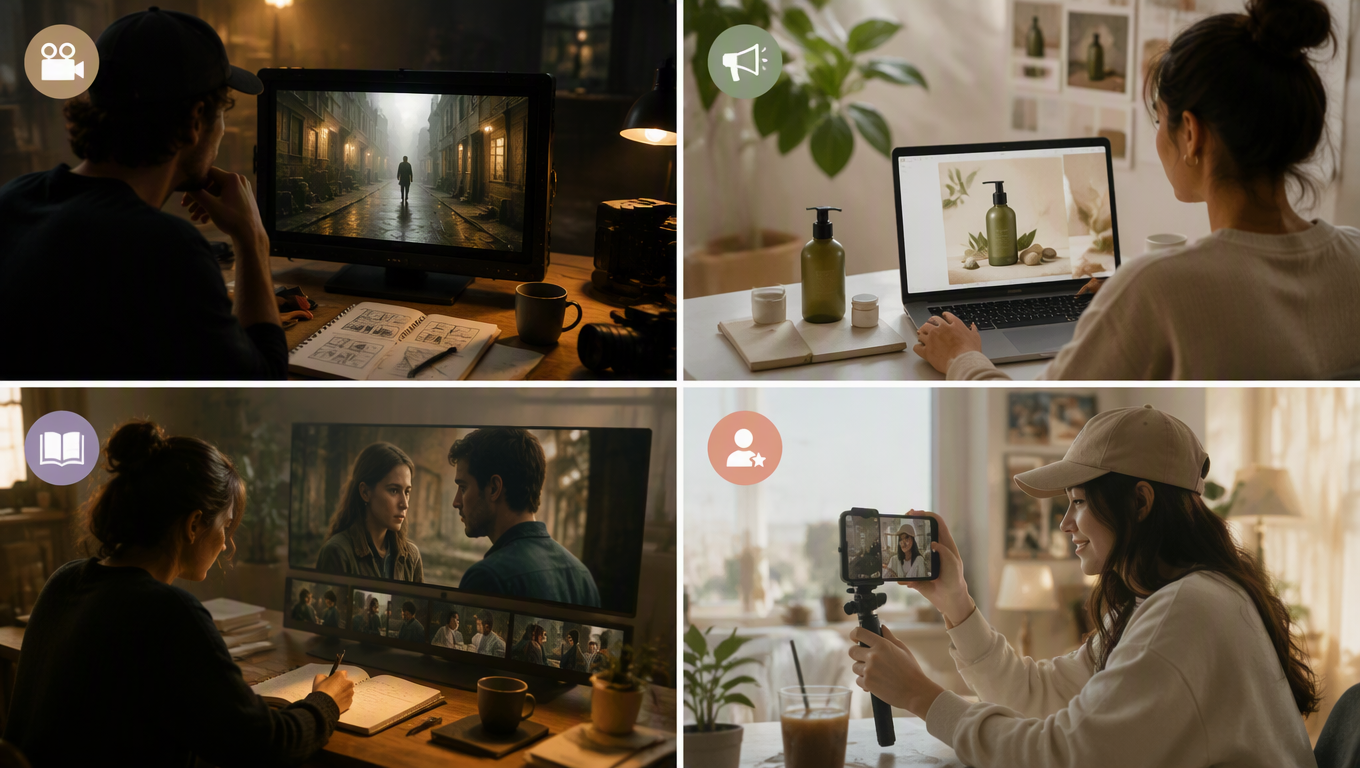 Wan 3.0 for Different Types of Creators
For Filmmakers
AI video can serve as a rapid visualization tool.
Creators can explore camera concepts, scene compositions, character blocking, and visual atmosphere before moving into full production.
For Marketers
Marketing teams can transform existing product assets into promotional scenes, advertisements, and social media videos.
Longer sequences and reference-based generation can be especially useful for product-focused storytelling.
For Storytellers
Writers and visual creators can use longer scenes and improved character performance to develop character interactions and narrative moments.
For Social Media Creators
Individual creators can experiment with different visual concepts and produce more varied short-form content without creating every visual asset manually.
From Generation to Iteration
Generating a video is only the first step of the creative process.
For professional creators, the ability to refine an existing result can be just as important as generating the initial version.
Future AI video tools will increasingly need to support targeted edits, such as changing a character's outfit, adjusting the background, or modifying lighting while preserving the rest of the scene.
This points toward a more flexible workflow:
Generate → Review → Modify → Refine → Finalize
Instead of regenerating an entire video whenever something needs to change, creators will be able to make targeted adjustments while preserving elements that already work.
This shift—from generation to iteration—could become one of the most important directions in the next stage of AI video creation.
Frequently Asked Questions
What is Wan 3.0 AI Video Generator?
Wan 3.0 is a next-generation AI video generation model designed to create more coherent, flexible, and realistic video content. Its key capabilities include longer video generation, multimodal understanding, and improved character performance.
How long can Wan 3.0 generate videos?
According to publicly released information, Wan 3.0 supports video generation of up to 30 seconds, providing more room for continuous actions and storytelling.
What does multimodal understanding mean?
Multimodal understanding means that AI can work with different forms of creative information rather than relying exclusively on text.
These inputs can include images, videos, and other visual references.
Why is character consistency important?
Characters need to remain recognizable throughout a video. Consistent facial features, expressions, and movement are particularly important for story-driven content and recurring digital characters.
What can Wan 3.0 be used for?
Wan 3.0 can support a variety of AI video applications, including:
· Film and entertainment
· Marketing and advertising
· Product visualization
· Digital humans
· Virtual characters
· Social media content
· Story-driven video
Conclusion: From AI Generation to AI-Assisted Creation
Wan 3.0 represents an important step in the evolution of AI video generation.
Its significance is not limited to longer videos, multimodal inputs, or more realistic characters individually. The larger opportunity comes from combining these capabilities into a more practical creative workflow.
Creators can start with an idea, bring in existing visual assets, design a scene, generate a longer sequence, review the result, and refine it.
The process becomes:
Idea → References → Scene → Generation → Review → Refinement
rather than simply:
Prompt → Short Clip → Regenerate
That is the more important shift.
AI video is gradually moving from a tool that generates isolated visuals toward a system that can participate in the creative process.
The future will not simply be about generating more video.
It will be about helping creators turn ideas, references, characters, and stories into complete visual experiences—faster, more flexibly, and with greater creative control.