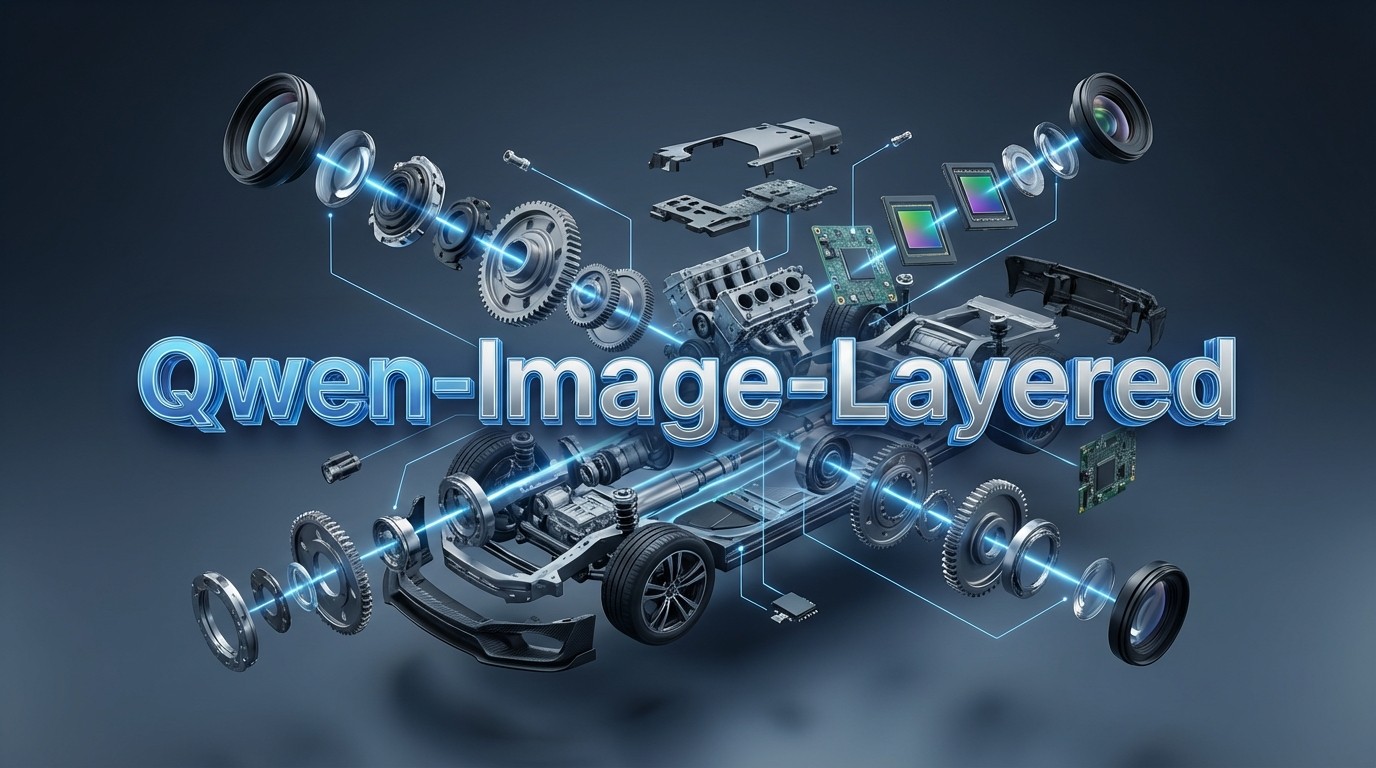
Qwen-Image-Layered: Put Photoshop-Level Layered Operations at Your Fingertips
Have you ever experienced such frustration: trying to move the main subject in an AI-generated image 10 centimeters to the left, only to find the background completely changed and the style distorted; wanting to modify the text on a poster, but having to regenerate the entire image and repeatedly trial and error? For a long time, the randomness of "a single change affecting the whole" has made AI image generation difficult to replace traditional tools in the professional design field. This impasse was completely broken with the launch of Alibaba's open-source new image model Qwen-Image-Layered — it achieves Photoshop-level layer understanding and generation within the model for the first time, ushering AI image editing into an era of "precision and controllability" centered on layers!
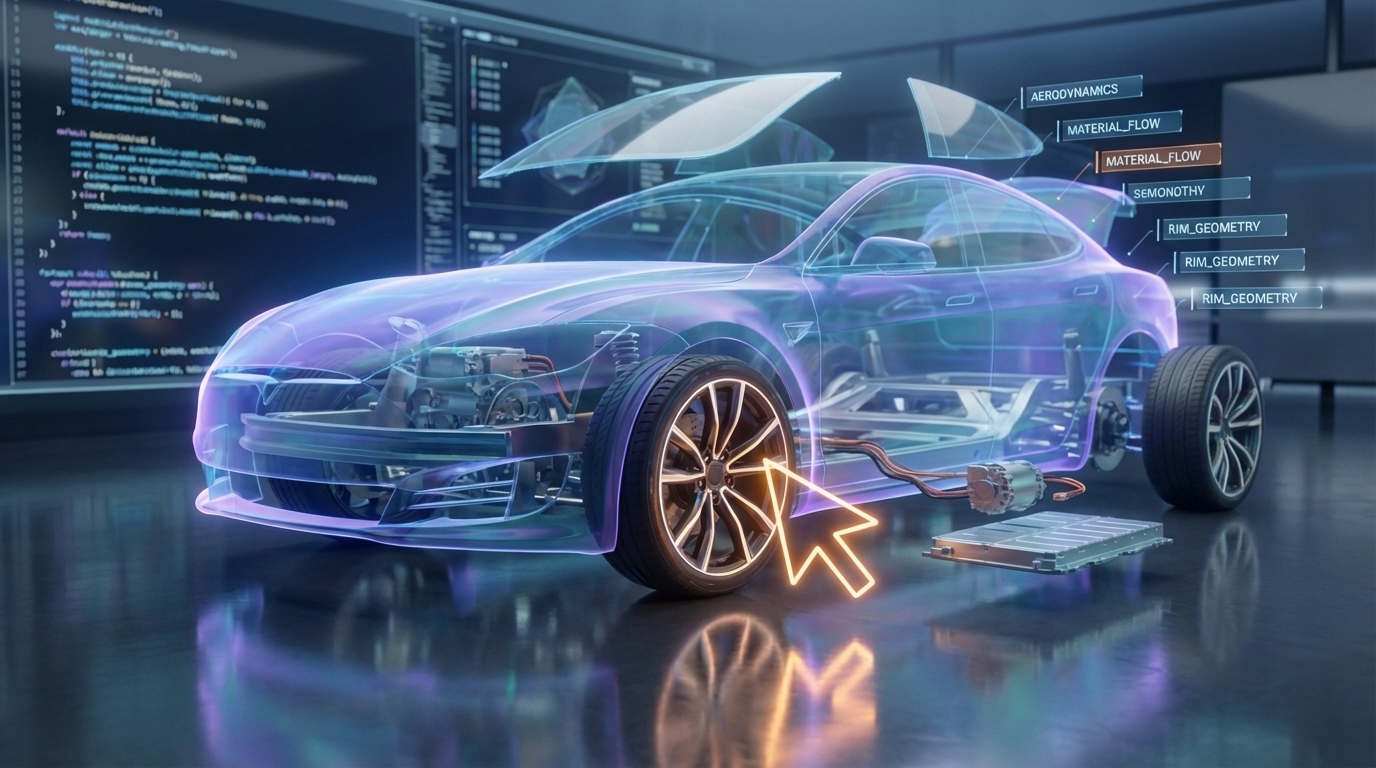
Core Breakthrough: Qwen-Image-Layered Realizes Paradigm Shift from "Pixel Piling" to "Layer Deconstruction"
Traditional large vision models have a "flat" understanding of images, essentially just predicting and piling up pixels. The most subversive innovation of Qwen-Image-Layered is enabling AI to possess the "layered thinking" of professional designers — through its self-developed architecture, it automatically "disassembles" images into multiple independent layers with alpha transparency channels (RGBA), just like creating layered graphics in Photoshop. Each layer corresponds to a semantic or structural component (such as foreground objects, backgrounds, text, etc.).
This "endogenous editability" fundamentally solves the consistency problem: when moving the main subject, AI can automatically fill in the occluded background textures; when modifying local colors, other layers remain unchanged; when deleting redundant elements, the edge transition is natural and seamless. From now on, AI image generation is no longer a "one-time finished product" but a "structured material library" that can be adjusted infinitely, completely bid farewell to the "blind-box-style" editing dilemma. 
Hardcore Technologies: Three Core Architectures Undepinning Precise Layering
The powerful capabilities of Qwen-Image-Layered stem from the collaborative empowerment of three self-developed technologies, making layered editing both precise and flexible:
RGBA-VAE Encoding: Equips AI with "transparent eyes". By introducing an alpha transparency channel on the basis of traditional RGB images, it enables accurate matching between ordinary images and layered images in the same space, solving the pain points of blurred layer boundaries and uneven distribution.
VLD-MMDiT Architecture: Possesses the ability to process "variable-length layers", which can be flexibly decomposed into 3 layers, 10 layers or more according to needs. Layers work collaboratively through the attention mechanism, eliminating the need for inefficient recursive decomposition.
Professional Data Training: Extracts layer logic from massive real Photoshop (PSD) files, allowing the model to master the layered mindset of professional designers from "birth" and ensuring that the decomposition results meet actual editing needs.
Actual test data confirms its technical strength: it significantly leads similar solutions in the alpha transparency restoration accuracy (Alpha soft IoU) index, with color restoration error as low as 0.0033 and transparency accuracy as high as 0.916. Its editing stability is far superior to traditional global editing models.
More Qwen Image AI Generator Online
Full-Scenario Empowerment: Qwen-Image-Layered Boosts Creative Production Efficiency Across Multiple Industries
Whether you are a professional designer or an ordinary creator, Qwen-Image-Layered can adapt to diverse needs and reshape the digital content creation process:
Advertising Design:During the launch of a new product by a beauty brand, it was necessary to quickly generate promotional posters suitable for multiple platforms. With Qwen-Image-Layered, designers decomposed the image into 3 core layers: lipstick product, "Buy One Get One Free" text, and gradient background. They completed background replacement and text layout adjustments for multiple versions of the poster in just 15 minutes. Previously, the same work took more than 3 hours, and now the launch efficiency has increased by 80%.
Film and Television Post-Production:During the filming of a campus youth web drama, a classroom scene suffered from insufficient brightness and grayish background blackboard due to lighting equipment failure, while the skin tone of the foreground actors was normally exposed. The post-production team used Qwen-Image-Layered to decompose the image into 3 layers: actors, blackboard, and desks. They separately adjusted the blackboard layer for brightness enhancement, contrast adjustment, and gray removal, while keeping the actors' skin tones unchanged. There was no need for reshooting or supplementary lighting, and the post-production problem that originally took 1 day was solved in just 20 minutes.
Creative Design:When Li, an automotive designer, was providing a concept car proposal to a client, the client wanted to see the effects of different wheel hub styles. Li used Qwen-Image-Layered to decompose the concept car image into layers such as body, wheel hubs, and car windows. He only replaced the wheel hub sub-layer (from five-spoke sporty style to multi-spoke business style), and the body color and light reflection were automatically adapted. He generated 3 differentiated plans within 1 hour, and the client quickly finalized the final design, saving 2 days compared with the traditional process.
Image Restoration and Education:Ms. Wang, a citizen, wanted to restore a family photo taken in 1985. The faces of the people in the photo were intact, but the walls of the old house in the background were severely faded and scratched. With Qwen-Image-Layered, the restorer decomposed the image into 2 layers: the people and the background. Only the background layer was processed for texture restoration and fade correction, perfectly preserving the original expressions and details of the people, and making the old photo revitalized.
In an art class at a middle school, the teacher used the model to decompose Van Gogh's "The Starry Night" into 3 core layers: sky, village, and trees. Students could clearly see Van Gogh's brush stroke overlay logic and color layers. The originally abstract concept of "brush stroke overlay" became intuitive and easy to understand, and the classroom interaction rate increased by 50%.
Practical Extension: Secondary Development and Customized Applications
Beyond direct use, the open-source nature of Qwen-Image-Layered supports secondary development by enterprises to further expand the application boundaries. A well-known design software manufacturer developed a "one-click layered editing" plug-in based on this model and integrated it into its own design tool. After the plug-in was launched, users commented: "Previously, modifying a poster required switching between multiple tools. Now, layered editing, modification, and export can be completed in one software, doubling efficiency." Furthermore, a film and television post-production company customized an "intelligent layered special effects system" based on this model, reducing the layering time of complex scenes from 1 hour to 5 minutes, lowering special effects production costs by 40%, and greatly improving project delivery efficiency.
Conclusion: Make Every Creative Idea Land Precisely, Make Every Edit Effortless
From the rapid cross-platform iteration of beauty posters to the efficient supplementary lighting in web drama post-production; from the flexible adaptation of concept car designs to the heartwarming restoration of old photos; from intuitive teaching in art classes to the functional upgrading of design software — Qwen-Image-Layered has reconstructed the entire process of creative production with "layered thinking", completely transforming AI image generation from "result-oriented" to "process-controllable".
It is not only a breakthrough progress in AI image technology but also a practical tool that democratizes professional capabilities and doubles creative efficiency. Whether professional creators pursuing high-efficiency output or ordinary users releasing creative expression, Qwen-Image-Layered is no longer just an "inspiration tool" but a "precision execution partner" that accompanies them all the time. In the future, it will continue to empower more industries and scenarios, making every inspiration materialize precisely, every edit effortless, and creative production simpler, more efficient, and full of infinite possibilities!